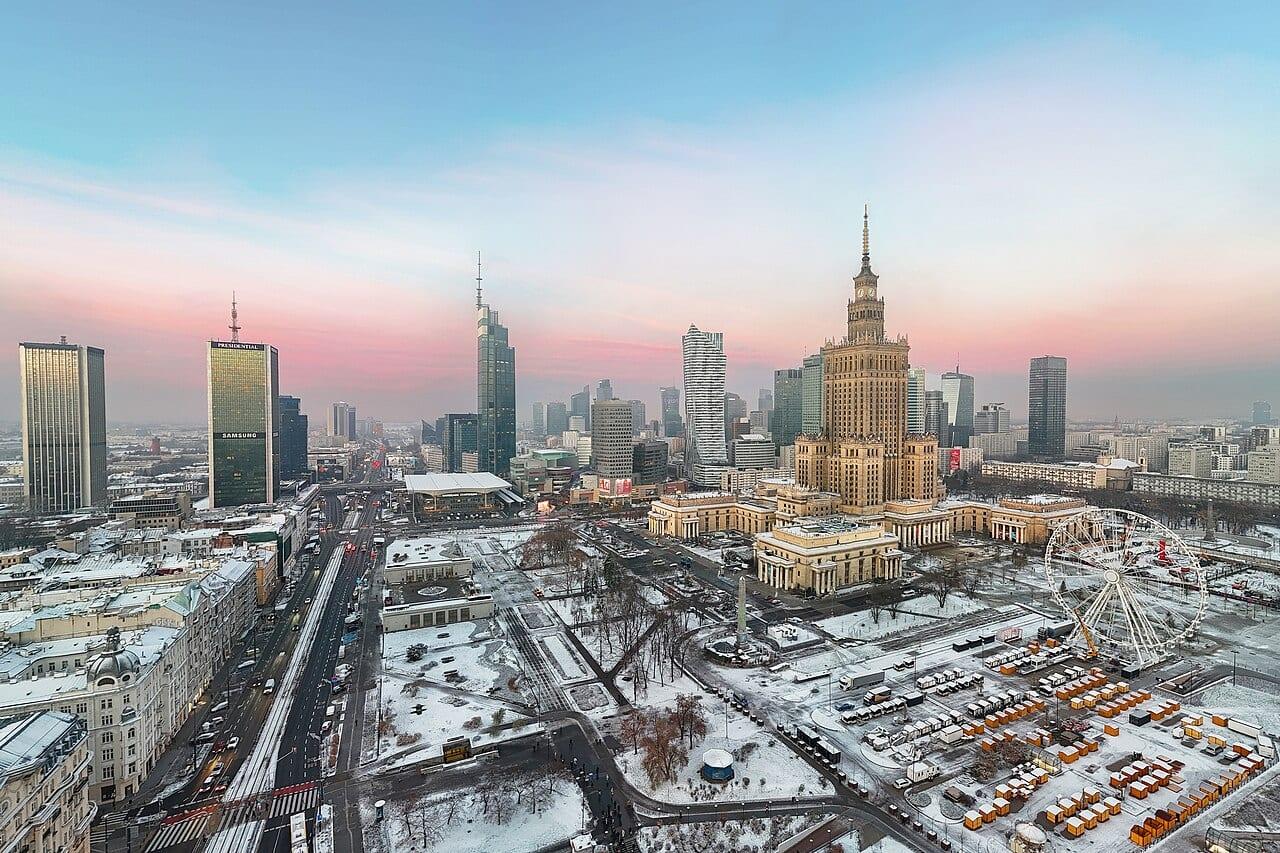
Warsaw City Guide

Warsaw is Central and Eastern Europe's most liquid and dynamic property market, anchored by Poland's standing as one of the EU's strongest-growing major economies. As the capital of a ~38-million-person nation that has avoided recession for three decades, the city combines deep domestic demand, a fast-expanding services and tech sector, and a maturing institutional investment scene. Residential prices have risen sharply since 2020 but remain well below Western European capitals, roughly €4,000–4,800/m² citywide versus €10,000+ in Paris or London, leaving room for the 'economic convergence' thesis that values and rents rise faster here than in mature markets. The market entered a stabilisation phase in 2025 after several years of double-digit growth: Q1 2025 resale prices averaged ~16,460 PLN/m² (+8.1% YoY), while the broader seven-city market cooled to roughly flat YoY by Q3 2025 as affordability and the end of subsidised-mortgage schemes tempered demand. Gross rental yields remain attractive by EU-capital standards at roughly 5–6.5%, supported by a structural rental shortage and strong student/expat demand. For foreign investors, Warsaw's appeal is reinforced by an open ownership regime, non-EU buyers can purchase standalone apartments with no permit, low transaction friction (2% transfer tax on resale), and a value gap against Western Europe. The main risks are PLN currency exposure, the recent cooling in price momentum, and a national short-term-rental registration regime taking effect from May 2026.

Updated May 24, 20268 min read

About Warsaw

Warsaw is Central and Eastern Europe's most liquid and dynamic property market, anchored by Poland's standing as one of the EU's strongest-growing major economies. As the capital of a ~38-million-person nation that has avoided recession for three decades, the city combines deep domestic demand, a fast-expanding services and tech sector, and a maturing institutional investment scene. Residential prices have risen sharply since 2020 but remain well below Western European capitals, roughly €4,000–4,800/m² citywide versus €10,000+ in Paris or London, leaving room for the 'economic convergence' thesis that values and rents rise faster here than in mature markets. The market entered a stabilisation phase in 2025 after several years of double-digit growth: Q1 2025 resale prices averaged ~16,460 PLN/m² (+8.1% YoY), while the broader seven-city market cooled to roughly flat YoY by Q3 2025 as affordability and the end of subsidised-mortgage schemes tempered demand. Gross rental yields remain attractive by EU-capital standards at roughly 5–6.5%, supported by a structural rental shortage and strong student/expat demand. For foreign investors, Warsaw's appeal is reinforced by an open ownership regime, non-EU buyers can purchase standalone apartments with no permit, low transaction friction (2% transfer tax on resale), and a value gap against Western Europe. The main risks are PLN currency exposure, the recent cooling in price momentum, and a national short-term-rental registration regime taking effect from May 2026.

Location

Warsaw, Masovian Voivodeship, Poland

Showing this map loads it from Google Maps, which sets their own cookies on your device.

Unlock the full city guide. It's free.

You've read the preview. 3 more sections are open to Explorer members, instantly, with just an email.

No spam, no password, unsubscribe any time.

Already a member? Sign in

  • City highlights
  • Market data and outlook
  • Neighbourhoods to explore

Figures are indicative and subject to change. Regulations, taxes and market conditions vary by jurisdiction. Do your own due diligence and seek independent legal and financial advice.
All city guides